

Cold-weather dressing gets awkward when your coat does too much and your outfit underneath does too little. Cropped Puffer Vests solve that middle-ground problem because they add warmth without swallowing your shape, especially when worn over long sleeve shirts, knits, and soft everyday layers. Across American campuses, coffee runs, weekend errands, and casual office days, the short puffer vest has become less of a “trend piece” and more of a practical styling tool. It gives structure where sweaters can look bulky, and it gives plain basics a reason to feel intentional. Readers who follow fresh fashion stories through seasonal lifestyle updates already know this shift is less about chasing a look and more about building outfits that work in real life. The best part is the balance. You get the comfort of warmth, the ease of movement, and a sharper waistline without dressing like you are headed for a ski lodge.
Why the Short Vest Shape Works So Well for Daily Layering
The cropped vest earns its place because it changes proportion fast. A full-length puffer can hide the outfit under it, while a shorter vest lets the shirt, sweater, pants, and shoes still speak. That matters when you want warmth but do not want your whole look reduced to one bulky outer layer.
How shorter outerwear changes the body line
A cropped vest usually stops around the waist or upper hip, which makes the legs look longer than they would under a long jacket. That small change matters most with relaxed jeans, wide-leg trousers, leggings, and knit pants. The vest creates a visual break, so the outfit feels shaped instead of piled on.
The trick works even better when the layer underneath has some length. Long sleeve shirts peeking below the hem create contrast without looking messy. Think of a fitted white tee under a black short vest with straight denim, or a ribbed beige top under an olive vest with cream pants. Nothing loud is happening, yet the outfit has rhythm.
A counterintuitive point: the cropped shape can make a warmer outfit look lighter. The eye sees open space at the lower body, so the puffer does not feel heavy. That is why cropped vest outfits often look cleaner than thicker coat outfits, even when both offer similar comfort for mild winter days.
Why bulk needs boundaries
Puffer fabric carries volume by nature, so it needs control. A vest gives warmth through the chest and back while leaving the arms free, which keeps the outfit from turning stiff. That freedom is why people reach for it during school drop-offs, grocery runs, travel days, and casual Fridays.
The strongest looks pair a padded vest with something slimmer underneath. A fine-knit turtleneck, cotton thermal, or ribbed crewneck can handle the volume without fighting it. When every layer is bulky, the outfit loses shape fast.
This is also where fabric matters. Matte nylon feels sportier, quilted cotton blends feel softer, and faux leather puffers lean city-ready. A short vest in one of those textures can carry the outfit, but only when the base layer knows its role. Let the vest be the shape-maker, not one more piece competing for attention.
Building Warm Outfits Around Shirts, Sweaters, and Knits
Once the shape makes sense, the next question is what goes underneath. The wrong base layer can make the vest look random. The right one makes it look like you meant every piece, even if you got dressed in ten minutes.
What tops work best under a padded vest?
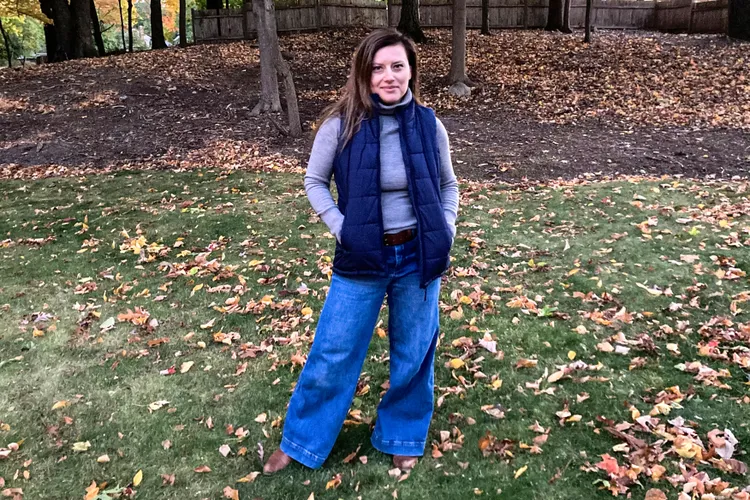
Slim cotton tops are the easiest starting point because they sit close to the body and do not bunch under the armholes. Ribbed long sleeve shirts are even better because the texture keeps the outfit from looking flat. A gray ribbed top under a navy vest with light-wash jeans has that relaxed American weekend feel without trying too hard.
Button-down shirts can work too, but they need care. A crisp striped shirt under a black vest looks sharp with loafers and tailored pants. A soft flannel under a tan vest feels right for fall markets, high school football nights, or a cabin weekend. The shirt should either hang cleanly or tuck neatly. Halfway sloppy rarely lands well.
Sweaters bring more warmth, but they also bring risk. Fine-gauge knits, mock necks, and fitted crewnecks usually behave well under a vest. Heavy cable knits can work when the vest is roomy, though the outfit needs slim pants or a clean skirt to stop the top half from taking over.
How can sweater layering feel warm without looking heavy?
Sweater layering works best when each piece has a different job. The sweater gives softness, the vest gives structure, and the pants decide the mood. A cream knit under a chocolate vest with dark denim feels calm and polished. A red sweater under a black vest with sneakers feels more playful and weekend-ready.
Color can do the heavy lifting here. Tonal layers, like oatmeal, camel, and brown, make the outfit look expensive even when the pieces are simple. High contrast, like white knit with a black vest, gives more edge. Neither choice is better. The better one is the one that matches the day.
One overlooked move is choosing a sweater with a defined neckline. Mock necks and neat crews frame the face better than stretched-out collars. That small detail matters because the vest already draws attention upward. When the neckline looks intentional, the whole outfit feels finished.
Matching the Vest With Pants, Skirts, and Shoes
A vest is only half the outfit. The bottom half decides whether the look feels sporty, polished, cozy, or thrown together. This is where many outfits fail, not because the vest is wrong, but because the rest of the pieces pull in different directions.
Which pants make the outfit feel balanced?
Straight jeans are the safest partner because they match the casual energy of the vest without adding extra volume. Blue denim, black denim, and ecru denim all work, depending on the vest color. For a school pickup in Chicago or a Saturday coffee walk in Denver, this pairing feels natural and easy.
Wide-leg trousers give a sharper result. The cropped vest sits high, the trousers fall long, and the outfit gains a clean vertical line. This works well for casual offices where a full blazer feels too formal but a hoodie feels too relaxed. Add a fitted knit and simple sneakers, and the balance feels current without being loud.
Leggings still deserve a place, but they need stronger styling. A vest over a longer sweater with tall socks and running shoes can look sporty in a good way. Without that longer underlayer, leggings can make the vest feel too top-heavy. The fix is simple: give the lower half either length, texture, or a stronger shoe.
When do skirts and dresses make sense with a vest?
Skirts soften the padded shape in a way pants cannot. A midi skirt with a fitted sweater and short vest creates a clean mix of utility and ease. It works especially well in fall, when full winter coats feel early but a single sweater feels thin.
Mini skirts can work too, though the styling needs restraint. A pleated skirt, opaque tights, and a quilted vest can feel fun for college towns or weekend brunch. Add too many sporty pieces, and the look can slide into costume. One athletic piece is enough.
Shoes close the argument. Sneakers make winter casual outfits feel grounded. Lug boots add weight when the weather turns rough. Loafers sharpen the look, especially with trousers or a skirt. The vest can adapt to each one, but the shoe must match the plan instead of fighting it.
Making the Look Feel Personal Instead of Repeated
The short puffer vest is popular enough that it can start to feel copied. That does not mean you should avoid it. It means you need small choices that make the outfit feel like yours, not like a mannequin from a mall display.
How do color and texture change the message?
Black is easy, but it is not the only answer. Ivory feels softer, brown feels warm, olive feels outdoorsy, navy feels classic, and burgundy gives the look more personality without screaming for attention. A different color can make the same vest formula feel new.
Texture adds even more range. A shiny nylon vest reads sporty. A matte quilted vest feels quieter. A sherpa-lined collar adds cozy charm. A faux leather finish pushes the outfit toward city style. These choices matter because the shape stays similar, but the message changes.
Cropped vest outfits also benefit from one unexpected contrast. A satin skirt under a puffer vest. A striped tee under a glossy vest. A soft hoodie under a tailored-looking vest. The contrast should feel believable, not random. Done well, it gives the outfit a human edge.
What small styling details make the outfit look finished?
Accessories should support the layers, not bury them. A ribbed beanie, small hoops, a canvas tote, or a compact crossbody can finish the outfit without stealing attention. Scarves work too, but thinner scarves usually sit better with a padded neckline.
Zippers matter more than people think. A fully zipped vest feels sporty and warm. A half-zipped vest shows the underlayer and shapes the waist. An open vest feels relaxed and creates movement. On mild days, leaving it open often looks better because the outfit underneath gets room to breathe.
Fit is the final test. The armholes should not pinch the sweater. The hem should not ride up every time you sit. The vest should feel roomy enough for movement but not so oversized that it floats away from the body. That line is where style meets actual life.
Conclusion
A short padded vest works because it respects how people actually dress when the weather cannot make up its mind. You need warmth in the morning, freedom by noon, and an outfit that still looks presentable when you walk into a store, office, classroom, or casual dinner. Cropped Puffer Vests work best when they are treated as shape, not decoration. Pick a clean base layer, give the outfit a clear bottom half, and let one texture or color choice carry the personality. The goal is not to copy every winter street-style photo you see. The goal is to build winter casual outfits that feel useful, flattering, and honest to your day. Start with one vest in a color you can wear three ways, then test it with your favorite shirt, knit, and pants before buying another. Good layering is not about owning more. It is about making fewer pieces do smarter work.
Frequently Asked Questions
How should a cropped puffer vest fit over a sweater?
It should close without pulling across the chest and leave enough room around the armholes for movement. The hem can sit at the waist or upper hip, but it should not ride up whenever you raise your arms or sit down.
What are the best long sleeve shirts to wear under a vest?
Ribbed cotton tops, thermal crews, fitted mock necks, and soft jersey tees work well because they stay smooth under padding. Long sleeve shirts with too much loose fabric can bunch around the shoulders and make the vest look bulky.
Can a short puffer vest work for office casual outfits?
Yes, when the rest of the outfit is polished. Pair it with tailored trousers, a fine knit top, loafers, and a clean tote. Choose matte finishes or neutral colors so the vest feels intentional rather than too sporty.
Are cropped vest outfits warm enough for winter?
They work best for mild winter days, car commutes, indoor-outdoor errands, and layered fall weather. In freezing temperatures, they need help from wool sweaters, thermal tops, scarves, gloves, or a heavier coat over the full outfit.
What shoes look best with a cropped puffer vest?
Sneakers, lug boots, loafers, and ankle boots all work. The best choice depends on the lower half. Sneakers suit denim and leggings, loafers sharpen trousers, and boots add weight when the outfit needs more cold-weather balance.
How do you style a puffer vest without looking bulky?
Keep the underlayer slimmer than the vest and balance the bottom half with straight jeans, trousers, or a clean skirt. Avoid stacking thick knits under tight armholes, because that creates bunching and makes the outfit feel crowded.
Can sweater layering look stylish with a cropped vest?
Yes, when the sweater has a clean neckline and the vest has enough room. Fine knits, mock necks, and fitted crews usually look best. Keep colors connected so sweater layering feels calm instead of visually heavy.
What colors are easiest for a first cropped puffer vest?
Black, ivory, tan, olive, navy, and brown are the easiest because they pair with denim, knits, leggings, and boots. A neutral shade gives more outfit options, while burgundy or forest green adds personality without limiting wear.