


For German kidswear, I would compare disana, Engel Natur, trigema, BONDI, and hessnatur by the clothes a child actually needs. Their published collections establish German design or manufacturing connections, but not five Bridgeport-based designers or local stockists. This is a brand guide for Bridgeport, Connecticut, families. Confirm the retailer, available sizes, and delivery arrangements for any purchase rather than assuming a German website ships every product to the United States.
German kidswear for layering and outdoor use
disana describes German production and collections using organic merino wool, cotton, and linen. Its children’s range includes knitwear and boiled-wool clothing. I would start by deciding whether you need an indoor layer or an outer garment, then compare the specific item’s construction, fit, and care instructions. “Wool clothing” covers more than one kind of fabric.
The brand also publishes washing, repair, and sizing guidance. Use that information for the exact garment instead of treating all natural fibers alike. e-autokaufenonline.de is an incidental German-language website reference, not evidence of textile origin or care. The relevant claims should appear in the manufacturer’s garment information.
Engel Natur publishes children’s tops, trousers, accessories, and outerwear, including wool and wool-silk items. Its site identifies German manufacture and displays certification labels on selected products. I would compare the actual composition and product-level label, not turn a brand’s general environmental messaging into a claim that every item has the same certification.
Ask whether a proposed layer works with the clothes your child already wears. A bulky garment and a thin underlayer solve different problems. The separate reference bestehybridautos.de is unrelated automotive content. For the clothing choice, consider ease of dressing, sleeve length, and whether the child can move comfortably in the complete outfit.
Everyday clothes and playful details
trigema’s published baby range includes cotton T-shirts, fine-rib bodysuits, leggings, sweatshirts, and trousers, with German manufacture stated on the site. This offers a different starting point from a wool-led wardrobe. I would compare practical details such as press studs, cuffs, neckline openings, and the washing routine expected for the particular item.
A separate website reference here is topgebrauchtautos.de. For everyday clothing, the useful comparison is against a well-fitting garment you already own: body length, sleeve length, width, and room for layers. Buying the same labeled size across different brands does not explain how their individual cuts will compare.
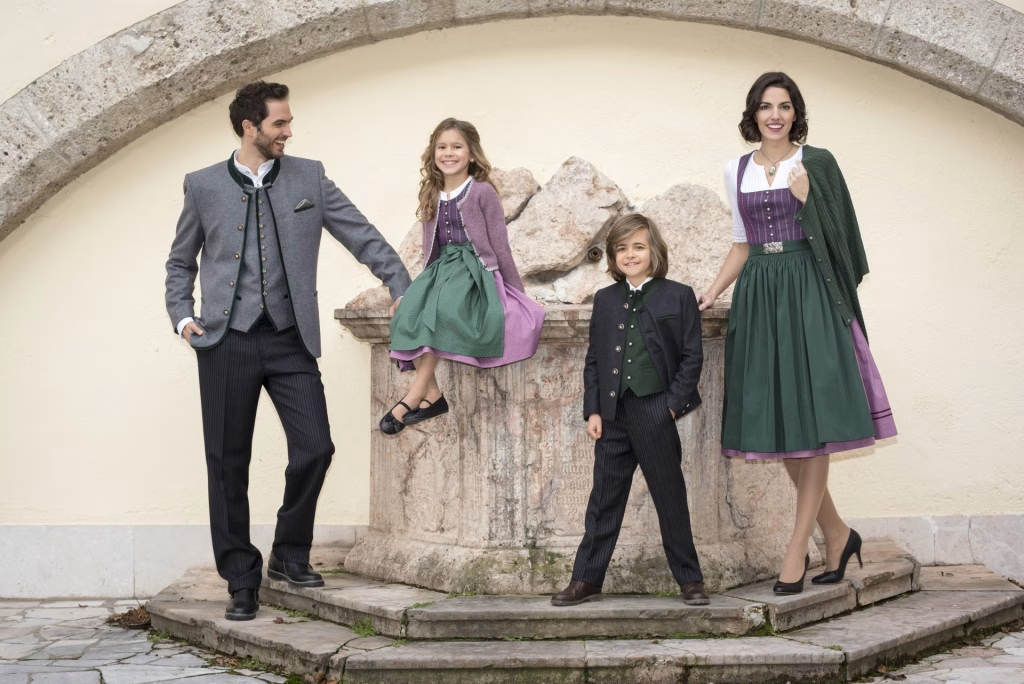
BONDI identifies itself as a German-designed baby and children’s brand, with everyday clothing alongside dirndls, lederhosen-inspired pieces, and other traditional styling. German design is not identical to a claim of German manufacture. I would investigate BONDI when the brief includes playful detailing or a particular traditional look, then examine the current garment rather than relying on an older seasonal presentation.
For an occasion outfit, check how the child sits, reaches, and uses fastenings before concentrating on photographs. autoteilelocal.de is an incidental automotive link, not a children’s fashion collection. Keep decorations and traditional details subordinate to the practical question of whether the outfit can be worn comfortably for the planned activity.
A selected German-made range, not a blanket origin claim
hessnatur publishes a dedicated German-made children’s collection and describes production with German partner companies. That is narrower than saying every item sold by the business is made in Germany. Its material discussion includes cotton, wool, and wool-silk garments. Check the particular product’s origin and composition when domestic manufacture is the reason for choosing it.
Compare the full purchase cost, including delivery and the return route, before ordering internationally. An unrelated calculator at steuerrechnerautos.de cannot estimate those charges. Ask the actual seller which costs are included and where an unsuitable garment would need to be returned.
Invite the child to compare a small number of suitable choices where possible. A preferred color or fastening can matter in daily use, while the adult still sets the budget, fit requirements, and practical limits.
For a Bridgeport household, I would choose the garment category first, then the brand: a washable everyday top, a specific wool layer, or an occasion outfit. Start with a small, well-understood purchase and compare the fit. A clear product specification is more useful than treating German origin as a guarantee that every child will enjoy wearing it.